
Scientific Advisory Panel
The Pollinator Stewardship Council relies on scientific data to keep pollinators safe from toxic pesticides. We are pleased to work with some of the leading experts in pollinator health, scientists who provide objective and informed guidance. Using the most modern and informed research studies, they provide evaluation and recommendations for risk assessment and pesticide exposure. We rely on their expertise to better understand the impact of regional and national pesticide policies on pollinator health, providing comprehensive scientific and expert review. They have been instrumental in drafting letters and comments linking relevant scientific research to current or proposed policies and are critical to the work of PSC.

Dr. Susan Kegley

Susan Kegley is Principal and CEO and Founder of the Pesticide Research Institute (PRI), an environmental consulting firm providing research, analysis, technical services and expert consulting on the chemistry of pesticides, industrial organics, inorganics and heavy metals. Her consulting work focuses on pollutant fate and transport; human and ecological exposure assessment and risk assessment; environmental monitoring and analytical chemistry. She also has expertise in pesticide regulation, toxicology and epidemiology.
Dr. Kegley has expertise in environmental, organic, inorganic and analytical chemistry, with an emphasis on pesticides and heavy metals, including their fate and transport in the environment. She has extensive experience in toxicology and risk assessment, policy analysis, sampling and analytical methods, data analysis and data management, and presentation of information for technical and non-technical audiences. She has provided litigation support and acted as an expert witness on a range of matters related to exposure analysis and risk assessment. Projects include assessing hazards of pesticides in commercial products, evaluating the effects of pesticides on bees, providing environmental monitoring services, and assessing exposure to pesticides in air, water, food, dust, and beehive matrices.

Dr. Judy Wu-Smart

Dr. Judy Wu-Smart (Assistant Professor & Extension Specialist) grew up in Concord, CA and received her BS degree in Zoology at Humboldt State University. She also completed a MS degree at Washington State University under the advisement of Drs. Walter “Steve” Sheppard and Carol Anelli and received her PhD from the University of Minnesota with Dr. Marla Spivak. Her research at UMN focused on sub-lethal and indirect effects of systemic neonicotinoid insecticides on queen performance and colony development in honey bees and bumble bees. She currently serves as the director of the University of Nebraska-Lincoln Bee Lab.
At UNL, she and her team have been developing a robust pollinator health program to help beekeepers, scientists, policy makers, and land managers understand the underlying stressors challenging bee health, including pests, disease, malnutrition, and exposure to pesticides. Community engagement and promoting science literacy around complicated environmental factors impacting bees are key components of the bee lab’s research and extension education opportunities, such as the Great Plains Master Beekeepers Training Program https://gpmb.unl.edu/ available to Midwest beekeepers.
Dr. James Nieh
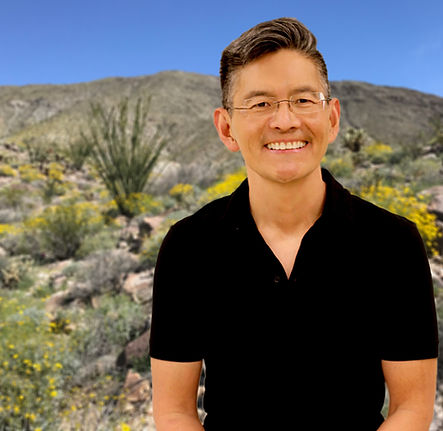
Professor James C. Nieh was born in Taiwan, and grew up in Southern California. He received his B.A. at Harvard in 1991 and his PhD from Cornell University in 1997. He subsequently received a NSF-NATO Postdoctoral fellowship to study at the University of Würzburg in Germany. After this, he received the prestigious Harvard Junior Fellowship. In 2000, he joined the faculty in the Division of Biological Sciences at the University of California San Diego where he is a professor in the Section of Ecology, Behavior, and Evolution. He held the Heiligenberg Chair of Neuroethology, was chair of his department, and was elected Fellow of the Royal Entomological Society in 2017. He is an Associate Dean in the Division of Biological Sciences.
Dr. Nieh’s interests focus on bee communication, cognition, and health. He studies many types of social bees, including honey bees, bumble bees, and stingless bees. His lab studies natural and man-made stressors of social bees. A major part of his work focuses on foraging and communication in honey bees and honey bee health. The research on honey bee health focuses on how pesticides alter honey bee behavior and learning, how a common pathogen, Nosema ceranae, infects bees and alters their behavior, how honey bee immunity can be boosted to fight Nosema infection, how the bee gut microbiome may help us find new ways to counter Nosema infection, and how a nutritionally balanced diet can help bees exposed to pesticides.